


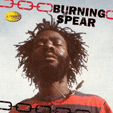
Burning Spear - Ultimate Collection  "Marcus Garvey words come to pass," Winston Rodney, known to the world as Burning Spear, opines on the seminal cut "Marcus Garvey." Garvey, born in the parish of St. Ann in Jamaica, took a message of Black upliftment around the world, empowering the disenfranchised and ultimately inspiring millions. Garvey's words resonate today partly because of a handful of Jamaican artists who have kept his words and thoughts alive. Spear, hailing (like reggae's ultimate superstar, Bob Marley) from the same area, has continued Garvey's work not only as lecturer and editorialist but as one of the hardest-working and best known reggae performers of all time. Born in 1948, Rodney came of age at the same time as reggae. His first late '60s recordings are among those Studio One singles that signaled a new direction away from the ska and rock steady sound that previously dominated Jamaica. From the beginning, Spear's unique African chant style was conscious and cultural, forging a sound he has never strayed far from in the intervening years. 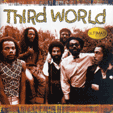
Third World - Ultimate Collection They have been going strong for nearly thirty years, and hold the distinction of being the longest running self-contained band from Jamaica. It is their supreme standard of musicianship, keen harmonic vocal abilities, and creative, individual song writing skills that have enabled the group to build the broad international fan base that has helped sustain their longevity. These positive and individual elements have defined Third World's popularity, making the group a band of reggae survivors that continues to spread uplifting messages through an approachable sound that crosses boundaries. The band has undergone several personnel changes since their official formation in 1973, but such changes have aided their survival by injecting fresh life into the group, ultimately causing various shifts in musical direction. To understand the group's progression, it is perhaps best to first look at the history of a related self-contained unit: the Inner Circle group, active since the late 1960s. That group included some key members who would later form the core of Third World, namely guitarist Stephen "Cat" Coore, keyboardist Michael "Ibo" Cooper, vocalist Milton "Prilly" Hamilton and percussionist Irving "Carrot" Jarrett; William "Bunny Rugs" Clark, who has been Third World's lead singer and figurehead since 1976, says he first performed with these musicians in Inner Circle upon returning to Jamaica from New York towards the end of 1969. 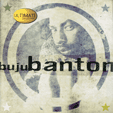
Buju Banton - Ultimate Collection Almost single-handedly Buju Banton changed the face of Jamaican dancehall from the sex and gun imagery of the 1980s to the return-to-roots and Rasta direction that dominates again today, bringing with him a slew of contemporaries like Capleton and new young dj's such as Anthony B and Sizzla. His rough and tumble vocal style, like Howlin' Wolf on acid, cuts through contemporary riddims like a lightning bolt through a dark sky. Musical integrity, showmanship and innovation have been the hallmarks of his career, especially in his work for producer Donovan Germain from the late '90s to the present. Live and on record he continues to excite and to present black culture, especially in it's uniquely Caribbean form, in a positive light that society at large has often denied it. Originally known as Mark Myrie, the name he did his earliest recording under, he was influenced by the dancehall dj's of his youth including Burro Banton whose stage name he partly "borrowed" to create his own. In Jamaica "banton" is the word for storyteller, and with Buju's success the word was given a new life as dozens of younger dj's influenced by Buju's style and success, made it part of their own stage name. Today the name "Banton" is as popular among dj's as "Ranks" was during Shabba's reign. 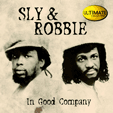
Sly & Robbie - Ultimate Collection Sly Dunbar and Robbie Shakespeare have played hits, produced them and regularly reinvented reggae. For 30 years. And they're still doing it. Before our jam-packed disc even slides into your CD player, know this: it's the Cliff's Notes version of something that's really enormous. Their hands forged much of the last three decades' musical history in Jamaica, and worldwide. The 16-year-old Lowell Dunbar, nicknamed "Sly" after his idol, Sly Stone, was brought in by keyboard player Ansel Collins to play on "Night Doctor" by the Upsetters and "Double Barrel," the historic 1971 U.K. No.1 and U.S. top 20 hit by Ansel and singer Dave Barker. Drumming and touring with Skin, Flesh and Bones, the house band of the nightclub Tit for Tat, Sly played a soul and disco-flavored style typified by Al Brown's cover of the Al Green tune "Here I Am (Come and Take Me)," a huge hit in Jamaica and the basis of UB40's later pop hit. 
Steel Pulse - Ultimate Collection When pop culture historians document the evolution of contemporary pop music, they will no doubt cite reggae as the most influential of all; its sociopolitical and cultural impact globally is inestimable. Reggae's story feels like myth: Rhythm birthed by Nyahbinghi ritual drummers, suckled by Rastafarian griots, baptized in the outdoor fires of Kingston's bleak tenement yards, funked up by booming sound systems/sweaty dancehalls, rubbed up-dubbed down by genius producers (King Tubby, Coxsone Dodd, Jack Ruby, Lee Perry) reggae becomes the dominant pop music in Jamaica (late-'60s). Reggae becomes "the music of the ghetto," its singers/players/DJs straight from yard and keeping it real with phat grooves, raw beats, rude bwoy swagger, Rastaman polemic, partytime slengteng. Three events change not only the course of reggae but the shape of much US/UK pop music to soon come. The first was '72's filmed-in-JA feature The Harder They Come. The guns-ganja-ghetto pulp fiction and its reggae hits soundtrack (featuring songs by lead actor Jimmy Cliff) made Cliff reggae's first true superstar as well as crossing over to rock 'n' pop audiences in the US and UK. The second was the Wailers' '73 album debut for Island Records, Catch A Fire. Darker-edgier-dirtier-rockier-funkier-realer, Catch A Fire introduces the world to Bob Marley. We all know what happened next - Eric Clapton covers Marley's "I Shot The Sheriff," Marley & the Wailers go mega, JA recording industry booms, stars are born everyday, reggae gets on America's radios, Bob makes the cover of Rolling Stone. Reggae was in its Golden Age. The only politics you could feel-laugh-love-dance-to, reggae traveled well, from a penthouse stereo system to the boombox of a Rhodesian freedom fighter. After Marley's death in '81, Jamaican reggae went into a gradual decline as musicians were replaced by more cost-effective rhythm tracks. The dancehall was now the 'live' concert stage, the audience mostly Jamaican. Back to square one. Down but not out, JA reggae busts back in '91 on the throat, wit, boombastics of Shabba Ranks. Raw As Ever wins a Grammy, moves millions of units worldwide and brings on the next generation of JA reggae internationalists that is conquering planet groove right here, right now. 
Black Uhuru - Ultimate Collection Every generation has one: an artist who rails against injustice and advocates revolution, and does it atop an equally unyielding musical foundation. The Last Poets, Gil Scott-Heron, The Clash, Public Enemy and Rage Against the Machine are but a few. In early-'80s Jamaica, the torch was held by Black Uhuru. Seen as the successors to Bob Marley, who passed in 1981, Black Uhuru bore the standard of roots reggae during a time of considerable musical and sociopolitical shift while simultaneously expanding the creative limits of the entrenched genre. Black Uhuru followed the organic path of many vocal harmony groups of the roots period. The nucleus fused when Derrick "Duckie" Simpson teamed with Garth Dennis. Dennis lived and breathed music: he grew up in the Trenchtown district (whose notable resident was Bob Marley), and his sister Joey was half of the early-'60s ska duo Andy & Joey, whose hit "You're Wondering Now" was later covered by the '70s British ska group The Specials. Living on the same road in Kingston's Waterhouse district, Simpson and Dennis gravitated to each other. The two then brought singer Don Carlos into the fold to complete the trio. They made their rounds on the studio circuit, cutting sides for Dynamic and Randy's. When the records gained little attention, the trio fractured: Garth Dennis joined the Wailing Souls, Don Carlos pursued a solo career, and Simpson was determined to rebuild Black Uhuru. Enter Michael Rose. 
Dennis Brown - Ultimate Collection Dennis Brown's career spans the history of Reggae. His earliest hits were among the genre's first as the new style moved away from the founding sounds of ska and rocksteady and he charted in every successive period - with rockers, steppers, lovers rock, roots, dancehall and even ragga and jungle. Charismatic and engaging on and off stage Dennis Brown managed to confront social issues without a chip on his shoulder and seemed to have as many friends as fans. Bob Marley may have been Jamaica's biggest international star but Dennis Emmanuel Brown, the Crown Prince of Reggae, was his homeland's best-loved son as the outpouring of emotion that followed his passing showed. Singer Scion Success told me he considers Brown, "the single most inspirational artist in reggae for singers. I think there have been more singers who have copied Dennis Brown, (including) Luciano, Frankie Paul, George Nooks - they all haven't been able to sound like him exactly but as they round off their imitation so to speak they descend into their own tone and stylized way." Others Brown inspired or who emulated his style include Richie Stephens and a whole new crop of singers like Prince Malachi, Prince Theo and Bushman. The word "sweet" barely begins to describe Dennis Brown's approach. 
Lee "Scratch" Perry - Ultimate Collection Lee Perry's prolific career parallels the history of Jamaican popular music, his active involvement crucially shaping every significant shift in popular taste from the dawn of ska to the end of the roots period. Having also recorded abroad since the early '70s, Scratch has never let his native land constrain him, and his exceptional creations have inspired many key music figures around the world. But despite such rising fame, he remains by design an enigmatic eccentric, largely enshrouded in a tangled web of mystery. The alternate cosmology Perry began to profess two decades ago has seen inscrutable actions and often baffling proclamations. He is a devout Rastafarian who believes in extraterrestrials and has likened himself to ET; he advocates black supremacy and waits for the installment of a theocratic world government, insisting that God and Jesus are black, but has fathered two children with a wealthy white Swiss woman he married in a Hare Krishna temple. Perry may be a mass of contradictions who skates the fine line between sagacity and madness, but the exceptional body of work he has created in the last four decades is an undeniable testimony to his genius. This collection presents some of his most noteworthy productions, giving particular focus to the key years of 1976-78 when at the height of his powers in the legendary Black Ark studio. 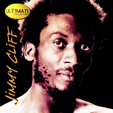
Jimmy Cliff - Ultimate Collection If you mention the name Jimmy Cliff, most people know you're talking about a popular reggae artist. If you ask them to name one of his songs, they would probably scratch their heads, or perhaps answer, "Electric Avenue," or something equally inappropriate. Generation-next probably will remember Cliff's top twenty cover of the Johnny Nash hit, "I Can See Clearly Now," from '93. But thankfully, many others would tell you he was the most popular reggae artist before Bob Marley, and that would be true. In the US, that popularity sprang from a soundtrack album that in the early '70s, was one of the biggest "FM" albums of the era and the greatest-selling reggae album of that period. It contained music from the film, The Harder They Come, and its plot had Jimmy Cliff acting as a Jamaican musician-gangsta. It also gave the world a realistic view of that country's politics, poverty and pot as seen from the perspective of its slums. Because of its anti-establishment overtones (and dubious drug references), it became a cult classic. His tracks, "You Can Get It If You Really Want" and "Sitting In Limbo" still get regular US air play. However, his legacy remains his modern classic, "Many Rivers To Cross," that was recorded by everyone with vocal chords over the past twenty-five and then some years. It actually was an ocean that Jimmy himself had to cross for his biggest musical break. He was born James Chambers on April 1, 1948, somewhat close to Kingston in Jamaica's Somerton area. Drawn to the arts in his childhood, he sang in the Pentecostal church's congregation, acted in school plays and taught himself guitar and piano. He wrote and played his own songs while in grade school, and even performed for 7,000 people at a county fair where he sang a ripping version of Fats Domino's "Be My Guest" vocally mimicking guitar, bass and drums as his "back-up" band. When he came of age, James attended a technical school in Kingston, but in '61, dropped-out when he decided his real calling was music. Adopting the professional name of Jimmy "Cliff" ("It implies the 'heights' I aspired to," he once said), he was determined to get his songs recorded. His first recording was "Daisy Got Me Crazy" with Jamaica's Count Boysie for a local studio. Their reaction was to offer him a shilling to return him home (though they released the song the following year). But in '62, he had his first Jamaican hit with "Hurricane Hattie," recording it for three Chinese-Jamaican entrepreneurs-the Kong Brothers. 
Various Artists - Dancehall Essentials Don't let the mellow tones on this album fool you - this is the sound of a nation in turmoil. Yet the sound also marked a return to the uniquely Jamaican approach to creating music. While the music of the 1970s - elaborate productions of new rhythms with socially, historically or religiously themed lyrics - is referred to as "Roots," the term may more aptly apply to Dancehall. The success of Bob Marley & The Wailers created a frenzy both at the major record labels wanting to build their own Jamaican music roster and in the artists looking for success off-island. But Jamaica's social troubles at the decade's end were reflected in the music: it turned inward, stripped itself down and returned to the dancehall. Returned to its roots. On foreign shores, reggae lovers largely ignored Dancehall music prior to Marley's death in 1981. Thereafter, fans checked into artists like Eek-a-Mouse and the output from Sly & Robbie's Taxi Productions. They discovered a music that was rhythm-driven with lyrics delivered in heavily accented - and thereby, for many listeners, unintelligible - Jamaican Patois. Furthering their disenchantment, the social themes prevalent in 1970s' Roots Reggae had, for the most part, disappeared. Fans turned a deaf ear to Dancehall (also known at this time as Rub-a-Dub), returning to Roots artists like Black Uhuru, Burning Spear, Third World and Dennis Brown, all of whom continued making records into the '80s. Still more abandoned reggae altogether. 
Various Artists - Ragga Essentials It's rare that the exact date of a shift in popular music styles can be pinpointed. One could look to March 11, 1960, the day a fledgling Motown issued Barrett Strong's "Money (That's What I Want)" on its Anna imprint, introducing the nation to the Sound of Young America. Or February 9, 1964, the night the Beatles appeared on The Ed Sullivan Show, opening the American gates to the British Invasion. Or even November 10, 1979, the day the Sugarhill Gang's "Rapper's Delight" debuted on the Billboard Pop charts, exposing the nation - especially white America - to the burgeoning world of hip hop. But in each case, the exactness is cloudy. Berry Gordy had been producing songs and licensing them to other labels as early as 1958; even "Money (That's What I Want)" was issued as an early Tamla single, unnoticed, seven months prior to the Anna pressing. And hip hop and the music of the British Invasion were well entrenched in their own communities long before the wider public took notice. In Jamaican music, the date is clear: February 23, 1985. That night at a sound system clash against Black Scorpio, Prince Jammy unleashed Wayne Smith's "Under Me Sleng Teng" on the unsuspecting crowd. The first full digital production of a reggae track, it was unlike anything ever heard from a Jamaican studio, and the reaction was immediate. With a flick of his musical wrist, Prince Jammy ushered in digital reggae, commonly known as Ragga. 
Various Artists - Roots Reggae Essentials This is tough music. It's the sound of the ghetto. Of sufferation. Of reality. Rebel music. Reggae music of the mid- to late-'70s increasingly - noticeably - became socially, politically and religiously conscious. Artists were singing of their own experiences, history, upbringing and neighborhoods. Of their roots and culture. It'd be misleading to not recognize that there were records issued both prior to and after this period that address similar topics. However it was the amalgam of subject matter, the uncompromising rhythms and the Jamaican social climate, plus the inroads reggae was making into global popular music that led many - even today - to call this period from 1973 to 1980 reggae's Golden Era. The initial shift toward the roots sound was driven by two forces: the stumbling of Jamaica's ruling political party and late '60s/early '70s American soul music. American Black music has long played an important role in Jamaican popular music. The owners of the early sound systems - mobile discos that played at local clubs and open-air spaces - who first spun the latest American R&B hits started producing their own version of R&B, cover versions for the most part, in the early '60s. This local R&B was infused with indigenous rhythms, creating Jamaica's first unique popular music - ska. Mid-decade, soul - especially the vocal harmony of groups like the Miracles and the Dells - affected the course of rocksteady. At the decade's end, Jamaicans started taking notice of the politically charged soul records that were being issued - the Impressions' "We're a Winner" and "This is My Country," Edwin Starr's "War," the Temptations' "Message from a Black Man" and the Chi-Lites' "(For God's Sake) Give More Power to the People" are but a few examples. Simultaneously, international news coverage of the Black Power movement increased, and the images of a proud, defiant Black populace captured the imagination of a newly independent nation. 
Various - Dub Reggae Essentials Start here. Here is where it all began - hip hop, trip hop, drum 'n' bass, the very art of the remix itself. All can be traced back to Jamaica. Take Dennis Alcapone's "Teach the Children": a Caribbean rework of Jean Knight's Stax hit "Mr. Big Stuff" first laid for crooner John Holt, but with Holt's mellifluous vocals replaced by Dennis' chatting. So, wait, wait, hold up - someone rhythmically talking over an old R&B tune? Sounds like rap to me. (For the record, the Jamaican sound system set-up of two turntables and a microphone came Stateside via Clive Campbell, a Jam Down youngblood who, under the name Kool DJ Herc, got the party started right at a Bronx rec center party in 1973.) By the mid-'70s studio wizardy became paramount; who was behind the board was as important as who was behind the mic. Mixers credited on records. The engineer as auteur. The echo was heard 'round the world. Producers adopted and adapted, reworked and recycled. Radio Remix. Club Mix. Indeed, the Dub Mix. In the '90s, cousins meet in Bristol: dub and hip hop meld into trip hop. Likewise, dub meets techno uptown to yield drum 'n' bass. It's all here, children, from the roots to the fruits, for your edification and enjoyment - the story of the remix, chapter and version. |